At a glance
- Limit value: not detectable, 0 CFU/100 ml (recommendation of the Drinking Water Commission at the UBA)
- Legal status: not a mandatory parameter for building water installations (Annex 3 TrinkwV). In hospitals, care homes and childcare facilities the German Environment Agency recommends testing at least once a year
- Distinction: not part of the routine Legionella test (Legionella: Annex 3 Part II TrinkwV)
- Detection: by culture in accordance with DIN EN ISO 16266, from a 100 ml sample
- Clinical relevance: above all immunosuppressed patients, a common cause of nosocomial infections
Where Pseudomonas takes hold
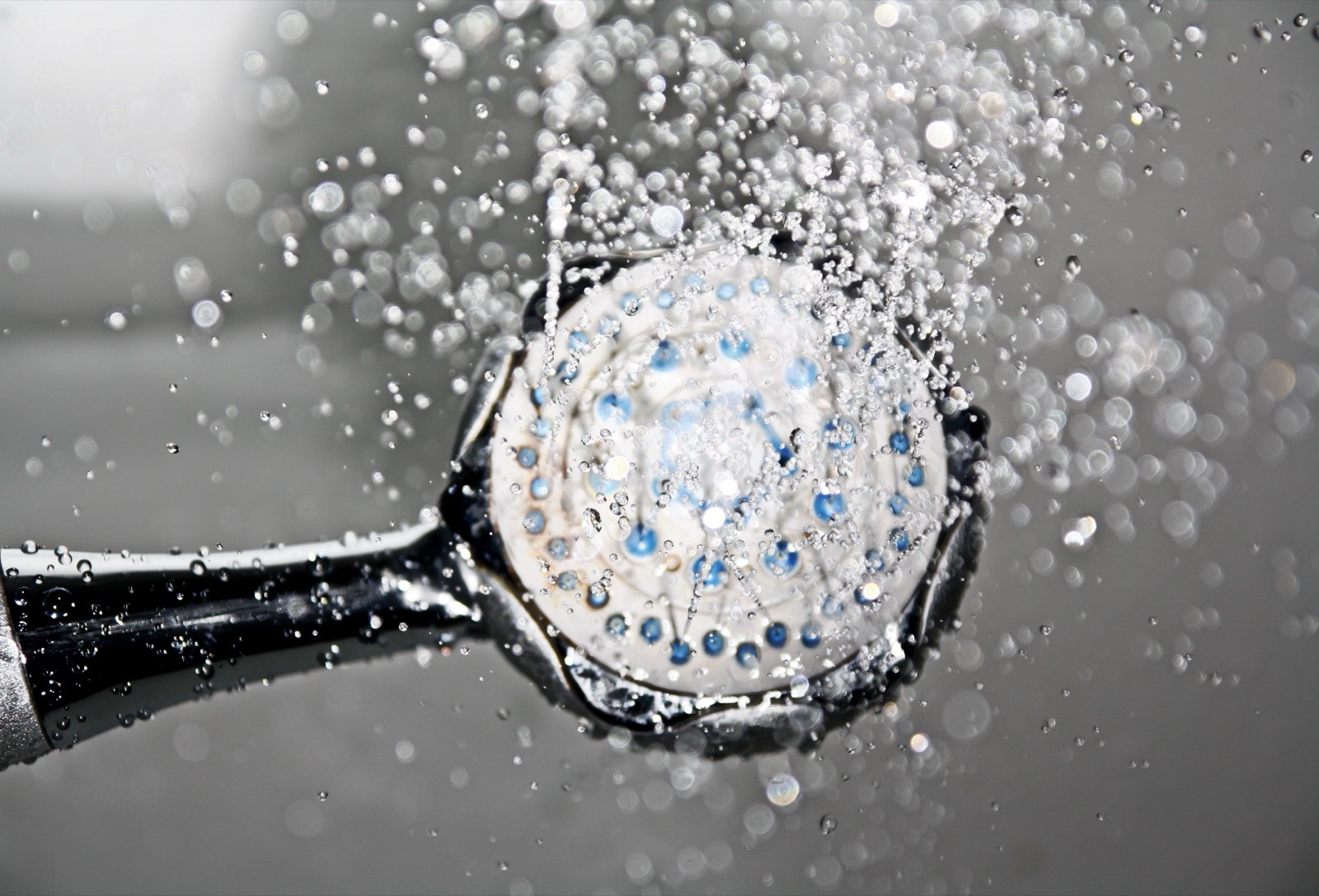
Unlike Legionella, which mainly arises in the distribution system and the hot water tank, Pseudomonas prefers to colonise the last few centimetres before the outlet. Aerators, flow regulators, shower hoses and shower heads give it damp, leftover water and a surface to cling to.
Pseudomonas and Legionella compared
| Legionella spp. | Pseudomonas aeruginosa | |
|---|---|---|
| Main location | Hot water tank, distribution system | Point-of-use fittings, aerators |
| Temperature optimum | 25 to 45 °C | 30 to 37 °C, also tolerates colder temperatures |
| Transmission | Aerosol, inhalation | Contact, wounds, aerosol |
| Mandatory TrinkwV testing | yes, § 31 | no (Annex 3); yearly in hospitals, care homes, childcare (UBA) |
| Requirement | Action value 100 CFU/100 ml | not detectable, under 1 CFU/100 ml |
| Main risk group | Older people, those with pre-existing conditions, smokers | Immunosuppressed, wounds, catheters |
Based on the Drinking Water Ordinance (§ 31 TrinkwV), the German Environment Agency (UBA) and the KRINKO recommendations of the Robert Koch Institute. Own illustration.
How Pseudomonas is detected
Detection is carried out by culture from a 100 ml water sample in accordance with DIN EN ISO 16266. Because Pseudomonas is not part of the annual Legionella test, sampling must be commissioned specifically, usually on suspicion, after a cluster of infections or as part of a hygiene plan. Sampling focuses above all on the outlets in high-risk areas, because that is exactly where the bacterium sits.
Why it is especially critical in hospitals
Pseudomonas is one of the most common causes of nosocomial (hospital-acquired) infections. In patients with open wounds, catheters or mechanical ventilation, even low bacterial counts are enough. To make matters worse, many strains are resistant to several antibiotics, which makes treatment considerably harder.
What helps against colonisation
Regular water exchange prevents residual water from standing for days in components at the outlet, since standing residual water favours colonisation. In addition, shower heads and aerators in high-risk areas belong in a fixed replacement and cleaning cycle.
In very high-risk areas such as transplant or intensive care units, terminal sterile filters are also used, holding the bacterium back directly at the outlet. Thermal disinfection of the distribution system alone, on the other hand, is often not enough, because it does not reach the components at the outlet adequately.
Automatic water exchange at the shower